Normative and legal frameworks

Blue Peace supports countries in forging transboundary water agreements, norms and institutions for mutual benefit of upstream and downstream countries, conflict prevention, and regional integration.

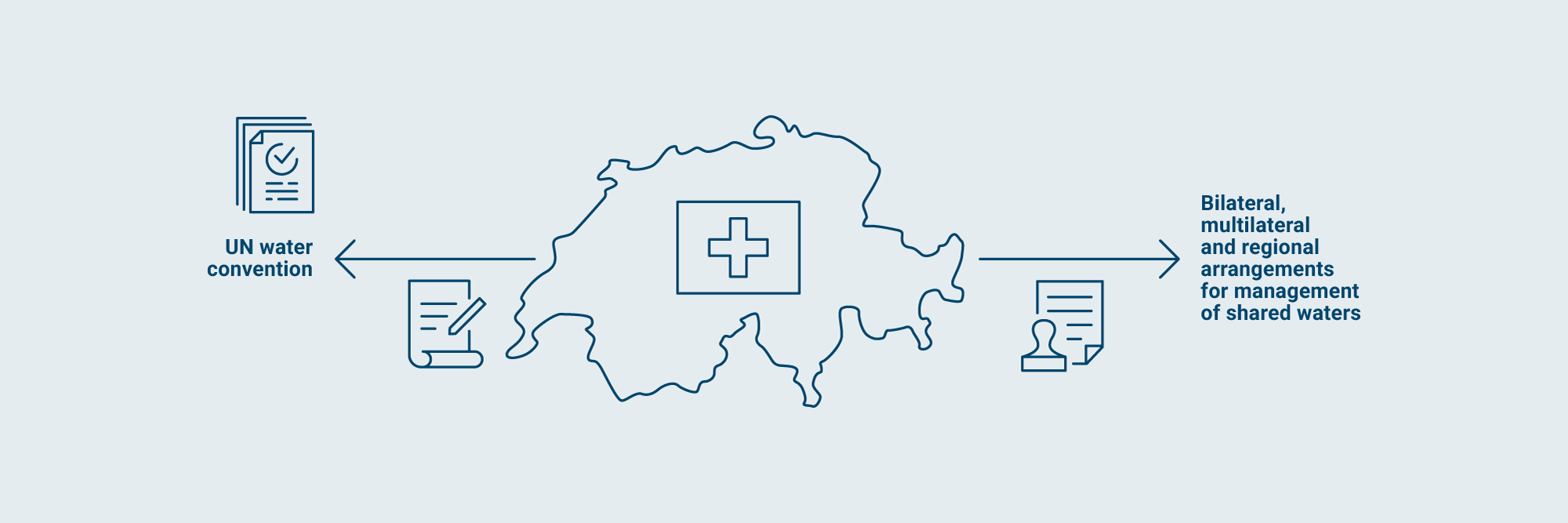
In many parts of the world, agreements for transboundary rivers and lakes are lacking or too weak to deal with growing water challenges. Currently, 42 of the 153 countries sharing transboundary waters have at least 90% of their waters covered by cooperative arrangements. The Blue Peace initiative supports countries and river basin organisations on their journey towards bilateral, multilateral or regional arrangements for the management of shared waters. In this endeavour, Blue Peace also promotes the United Nations Economic Commission for Europe (UNECE) Convention on the Protection and Use of Transboundary Watercourses and International Lakes. This United Nations global convention is also known as the “Water Convention”.

Water Convention

The Water Convention is a legally binding framework based on customary international law, which is complementary to existing basin-specific arrangements. It provides technical advice and platforms for exchange of expertise to Parties, as well as non-Parties to the Convention. The Convention helps countries maximise the benefits of transboundary cooperation, including addressing climate change, safeguarding sustainable water management and ecosystem protection, fostering the water-energy-food-ecosystem (WEFE) nexus and providing for equitable benefit sharing. By the end of 2025, 56 countries were Parties to the Convention with a growing number of countries in the process of accession.