Water under pressure

Rising demand for water puts increasing pressure on limited freshwater resources. Addressing this challenge is not only a matter of ensuring the human right to water for all, but also of global security.

Freshwater under pressure

Freshwater is a scarce resource: only 3% of the world’s water is freshwater, and more than two-thirds of it is frozen as snow and ice and therefore not accessible. Growing global population continues to intensify demand for water across many sectors, including domestic, agricultural, and industrial use.

Human right to water under pressure

The 21st century still grapples with ensuring the human rights to water: 30% of the world’s population – about 2.1 billion people – lack access to safe drinking water, while 60% – or 4.5 billion people – lack access to adequate sanitation. The global economy loses $260 billion each year due to the widespread lack of basic water and sanitation infrastructure.

These challenges are further exacerbated by a number of processes, particularly global warming. It drives climate change, which disrupts weather patterns, triggers unpredictable droughts and floods, and leads to glacier melt and shrinking freshwater reserves.

Ultimately, the growing gap between water availability and demand threatens global stability and prosperity. While water scarcity rarely sparks armed conflicts directly, it can exacerbate existing tensions and fuel tensions, thereby highlighting the need for collaborative solutions.
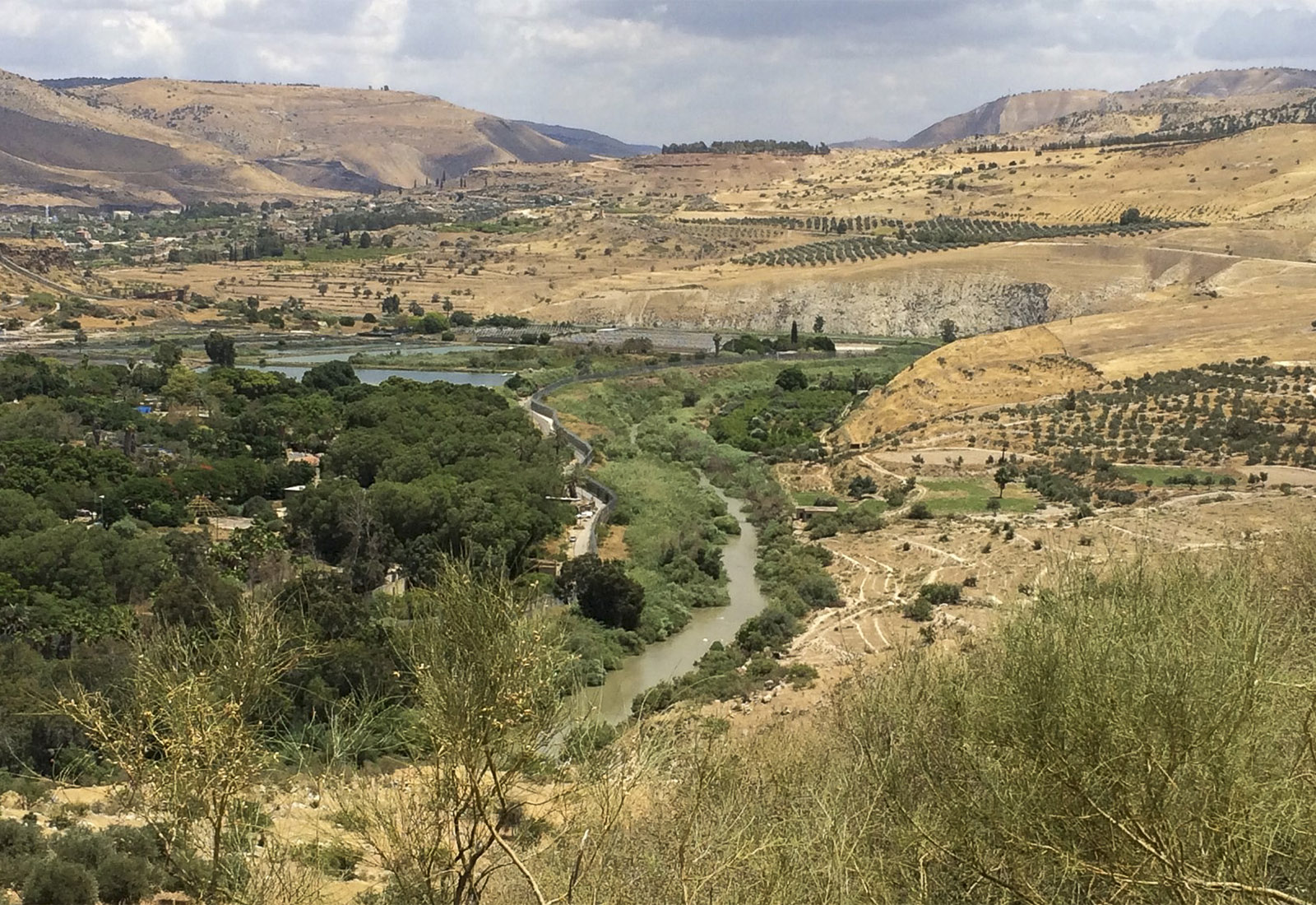
Water without borders

About 70% of the world’s population depends on water that flows across national borders, through transboundary rivers, lakes or underground aquifers. These shared resources create strong interdependencies between countries and connect a wide variety of societies, economies, and ecosystems.

Transboundary waters account for about 60% of the world’s freshwater flows, which are used for human consumption, food production, industry, and energy generation. Globally, there are nearly 300 transboundary surface water basins and around 600 transboundary underground aquifer systems.

Solutions urgently needed

Since 1948 around 300 international water agreements were negotiated and signed, resulting in less than 40 incidents of acute conflict over water in the past 7 decades. Yet only one-third of the world’s transboundary surface water (rivers and lakes) and less than 1% of the transboundary underground water (aquifers) have cooperation mechanisms in place.

To avoid potential future conflicts over shrinking freshwater resources, major efforts to discuss and formalize transboundary water cooperation mechanisms before problems arise, are urgently needed. Addressing water security as one of the key global challenges of the 21st century therefore calls for innovative and transformative approaches, such as the Blue Peace initiative.

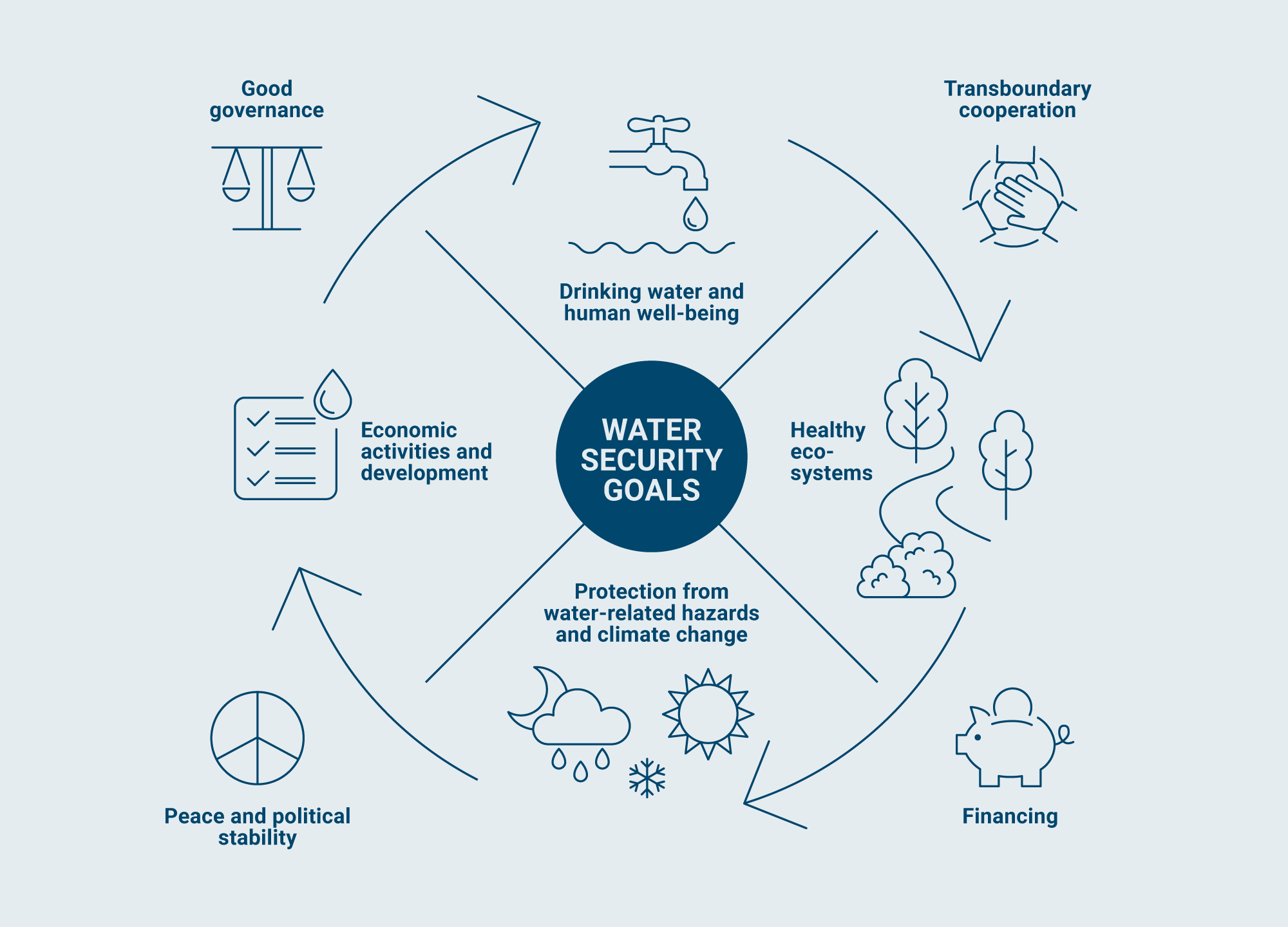
Conceptual framework of water security

Water security aims to ensure access to safe drinking water and improved human well-being, the protection of healthy ecosystems, support for economic activities and development, and protection from water-related hazards such as floods and droughts. Achieving and sustaining these outcomes depends on enabling conditions such as good governance, peace and political stability, adequate financing, and effective transboundary cooperation.
Source: UN World Water Development Report 2023 (p.176)

30%

of the world’s population – around 2.1 billion people – lack access to safe drinking water.